

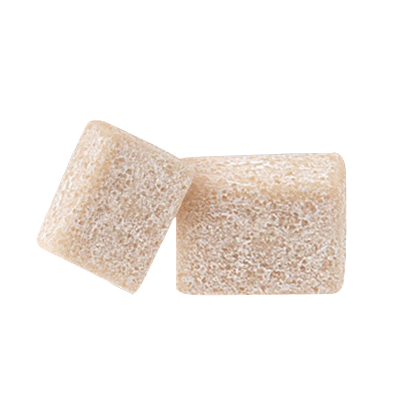

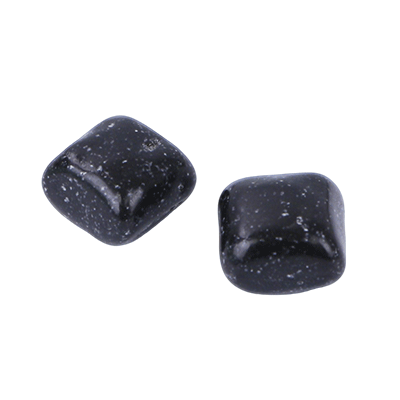


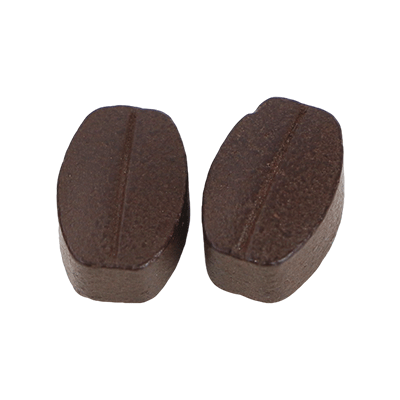








Dental practices have handed out chewing gum for years — after a hygiene appointment, at the front desk, in the chairside display. What has changed is that more practices now want that gum to carry their own name. This page is written for practice owners, group practice and DSO buyers, and the dental distributors who serve them: what private label chewing gum actually involves, the formats clinics order, and the labelling questions worth settling before artwork goes to print.
At AGOLYN we produce sugar-free chewing gum on an OEM/ODM basis for oral care and dental channel customers, including private label programmes where the finished, individually wrapped unit carries the buyer's brand rather than ours. This article covers the practical side: what you decide, what we decide, and what no supplier should be deciding on your behalf.
Who Orders Private Label Chewing Gum — and Why
Five buyer types account for almost every private label enquiry we receive in this channel, and the brief is different for each one.
| Buyer | What they want the gum to do | Typical first order |
|---|---|---|
| Independent dental practice | A branded item for patients — giveaway, or chairside retail | Low — pilot quantity |
| Group practice / DSO | One standard product across every site | Mid to high — multi-site rollout |
| Orthodontic / aligner clinic | Something patients will actually use through treatment | Mid |
| Dental distributor / dental channel brand | Their own brand on the shelf, alongside the names they already carry | High |
| Oral care brand entering gum | A gum SKU that completes an existing oral care range | Mid to high |
None of these buyers is asking for an unproven innovation. Chewing gum is a mature category. What changes in a private label programme is the name on the wrapper, the format, and the specification — which is precisely why the specification is where the work is.
What Changes When the Gum Carries Your Name
Private label is not just printing. Three things shift at once, and only one of them is visual.

- You become the brand. The patient or retail customer sees your name on the pack, so product questions reach you first — not a supplier they have never heard of.
- You set the specification. Flavour, unit weight, polyol system, wrap, pack count and print all follow your brief instead of being accepted from a catalogue.
- You keep the margin the brand owner was keeping. Buying to your own specification and packing under your own identity moves a practice or distributor from reseller to brand owner.
One consequence is easy to miss, and we would rather you hear it from us than from a regulator: in several markets the party that repackages or relabels a product under its own name is legally treated as the manufacturer of that product. That applies to a clinic putting its name on a carton just as much as to a distributor. Where a market classifies the product as a medical device, that manufacturer status carries real obligations. It is the first item on the checklist below.
The Three Formats Dental Practices Actually Order

Almost every dental private label programme settles into one of three formats. They are not interchangeable, and the minimum order differs sharply between them — usually the deciding factor for a single practice.
| Format | Typical unit | Where it lives | What matters most |
|---|---|---|---|
| Individually wrapped single unit (stick, pellet or cube) | Loose in a counter dispenser or jar | Reception desk, patient take-home | Wrap material and seal integrity — it sits in a pocket for hours |
| Blister or retail carton | 10–30 pieces per pack | Waiting-room display, retail shelf | Artwork area, board grade, shelf-life dating |
| Resealable pouch or bottle | 40–100 pieces per pack | Front desk, hygiene kit, online or subscription | Barrier film, closure performance, label space |
Choosing Between Them
If the gum never leaves the practice, single wrapped units plus a dispenser is the honest answer — it is the lightest entry point and the easiest to restock. If there is genuine retail footfall or an online shop, a carton or pouch gives you the label space and the perceived value that a loose unit cannot. And if you operate more than one site, standardise on one format first and add the second later; running two formats from day one is the most reliable way to create a stock problem.
Formulation: The Four Levers Your Brief Can Set
A chewing gum specification comes down to four decisions. All four can be set by the buyer rather than accepted from a catalogue.
| Lever | Options | Why a dental buyer cares |
|---|---|---|
| Pellet format and texture | Coated pellet, compressed cube, stick | How it presents in clinic — a cube reads differently from a stick |
| Polyol system | Xylitol, sorbitol, maltitol, isomalt, or a blend | Sugar-free is the baseline expectation in this channel, and the polyol choice drives the label |
| Flavour profile | Mint family (peppermint, spearmint), fruit, or a combination | Patient acceptance matters more than novelty in a clinical setting |
| Unit weight and pack count | From light pellets to larger cubes; pack counts per format | Cost per patient, and whether staff actually hand it out |
What we will not do is help write a claim that your market has not authorised. If your brief includes a mineral or another active component, we will tell you exactly what is in the formula, in writing, so that you or your regulatory consultant can decide how — or whether — it may be described where you sell. That is a conversation to have before artwork, not after printing.
Claims and Labelling: Who Is Responsible for What
This is the section most suppliers skip, and the one that decides whether your programme is safe a year from now.
A finished chewing gum does not belong to a fixed regulatory category. It sits where its intended purpose puts it — which means the wording you choose does more work than the ingredient list does.
| Market | How it is normally classified | Statements you can build on | The line not to cross |
|---|---|---|---|
| United States | Food / confectionery — gum base is a permitted food ingredient | The authorised health claim for non-cariogenic carbohydrate sweeteners and dental caries, which covers sugar-free chewing gum. The required wording is fixed — use it exactly. | Any claim to treat, prevent or cure a disease moves the product into drug territory |
| European Union | Food — unless the intended purpose makes it a medical device under MDR | The authorised claims for sugar-free chewing gum (tooth mineralisation, plaque acid neutralisation) and for polyols. Conditions and exact wording apply. | Therapeutic claims, and any intended purpose that pulls the product across the device boundary |
| United Kingdom | Food, under retained rules in the same shape as the EU | The same claim families as the EU | Same boundary as the EU — confirm wording before printing |
| Gulf and wider Middle East | Food, with Halal documentation required on entry | Permitted wording varies by authority — verify per country | Do not assume EU wording transfers unchanged |
Our position, and the one we would recommend you adopt: we supply the ingredient data, the specification and the certificates; label copy is written and approved by you or your regulatory consultant, and we review it only to confirm it matches the formula and the documents we ship. We say so in writing in our contracts. It protects you, it protects us, and it removes the most common source of dispute in a private label programme.
Put plainly: if a statement cannot be supported by an authorised claim in your destination market, it does not go on the pack — however well it reads.
Documents We Provide — and What We Need From You

Every production batch is inspected before release, with a Certificate of Analysis available per batch — so the gum you approved as a sample is what arrives in the carton. For a practice putting its name on the pack, that batch document is the answer to a patient question you did not have to place a phone call to answer.
Provided with every private label order:
- Batch Certificate of Analysis covering specification checks and microbiology;
- Ingredient and allergen declarations plus nutrition data, in a format your label designer can work from directly;
- ISO certified production, and Halal and Kosher certificates for your compliance file;
- Specification sheet for your own QA records or a group tender;
- Packing and loading specifications, so intake and storage are planned before the goods land.
From you we need the other half: destination market, the label wording you intend to use, and artwork files. Send the first two early. A word that cannot be used locally changes the artwork, and artwork changes are the single most common cause of delay in a private label programme — more than production, more than shipping.
From Brief to Carton
- Brief. Format, pack count, flavour direction, polyol system, destination market.
- Claim and label review. We confirm what the formula supports; you confirm what your market permits. This step exists to prevent a reprint.
- Samples and pilot. You test the gum, the wrap and the pack in your own setting — a humid clinic reception is a better test than a sample bag.
- Artwork and approval. Printed proof and pre-production sample signed off before the run starts.
- Production and shipping. Batch documents issued with the goods.
MOQ, Lead Time and Samples
First orders are flexible, and we would rather prove a specification on a small run than argue about it on a container. Lead time depends on format, print and season, so your account manager confirms it against your actual brief rather than quoting a figure that may not hold.
Samples are free. Tell us the format and flavour direction you are considering, and we will send the closest match — the wrapped unit, the pack, and the document set, so you can put it in front of the people who will see it every day.

Questions Practice Owners Ask Us
Can we put our own practice name on chewing gum?
Yes. We produce on an OEM/ODM basis, and the wrapped unit, carton, pouch or bottle can all carry your brand and artwork. Minimum quantities vary by format — the wrapped single unit is the lightest entry point, while cartons and pouches carry higher minimums because of print and board.
What is the smallest order for a single practice?
It depends entirely on the format. Individually wrapped units in a dispenser jar is the smallest realistic entry, and it is where most single-site practices start. Tell us your site count and how you intend to hand the gum out, and we will propose the format that fits rather than the one with the best margin for us.
Can we tell patients the gum prevents cavities?
No — and a supplier who tells you otherwise is being careless with your licence, not just their own. A disease-prevention claim changes the product's regulatory category in most markets, with consequences that fall on the brand owner, which in a private label programme is you. What you can rely on are the statements your market has already authorised for sugar-free chewing gum and for polyols, used with the exact required wording. We will point you to them and to the precise phrasing.
Is chewing gum a food, a supplement or a medical device?
It depends on the market and on the intended purpose you claim — not on the ingredient list alone. In the United States, chewing gum is normally regulated as a food. In the European Union, a product promoted for a therapeutic purpose can fall under medical device rules. Settle this question before artwork, because the answer determines what the pack is allowed to say and which channel may sell it.
Which formats can you produce?
Individually wrapped single units, blister packs and retail cartons, and resealable pouches or bottles. Flavour, polyol system, unit weight and pack count are set by your brief rather than fixed by ours.
Do you provide Halal and Kosher certificates?
Yes — alongside ISO certified production and a batch Certificate of Analysis. We provide them up front rather than on request, because dental channel buyers and their compliance reviewers ask for them either way.
Build the Pack Before You Commit to the Run
Dental practices, group buyers and dental distributors: try the format first.
Tell us the format, the flavour direction and your destination market, and we will send a free AGOLYN sample with the specification sheet, batch documents and certificate list — plus a printed proof showing how your artwork would sit on the pack.
Request Your Free Sample KitPrivate label chewing gum for dental practices & clinics — specifications, certificates and samples at www.agolyn.com


