
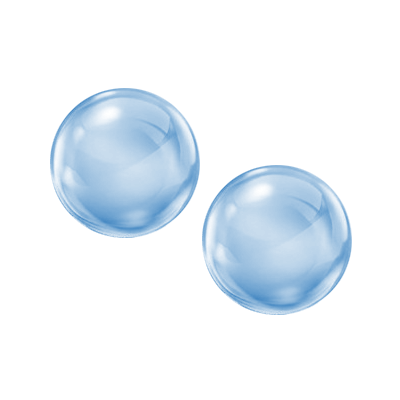

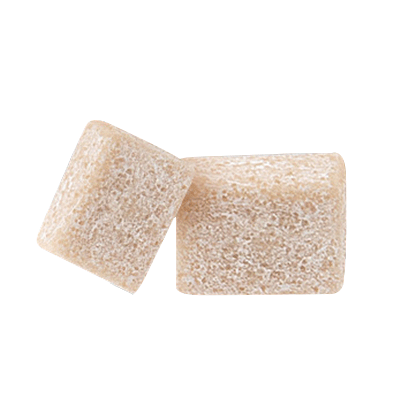

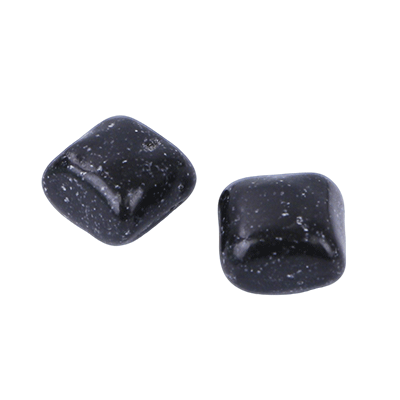










Two burst beads can look identical under a light box and behave completely differently in the mouth. One releases on the first bite with a clean snap; the other cracks early, leaks in the box, or stops bursting after three months in a warm warehouse. The difference is not the flavor. It is the order in which the core, the shell and the moisture are handled during production. This is what happens between a batch of syrup and a sealed 30-cap box.
Why the Process Decides the Product
A burst bead is a small engineering problem. The core has to stay liquid for the shelf life of the box, the shell has to be strong enough to survive filling and shipping but thin enough to break on the first bite, and both have to hold their shape at temperatures a container will realistically reach in summer. Every one of those requirements is set on the line, not in the flavor lab.
This is also why two suppliers can quote the same specification and deliver different products. The spec sheet says 30 caps and a 7 x 3 cm box. It does not say how much the core weighs, how many shell layers went on, or how long the batch cured - and those three numbers are what the buyer actually experiences.
Stage One: Building the Flavor Core
Production starts with the core, because the core is what the customer tastes and what sets the burst. It is prepared as a concentrated syrup, then held at a controlled temperature and viscosity before dosing - too thick and it will not fill cleanly, too thin and it will weep through the shell within weeks.
Where the cooling agent goes
The cooling effect is carried in the core, not the shell. That matters for two reasons: it releases at the moment of the burst rather than during handling, and it can be tuned by load without changing the shell process at all. This is why mint, lime and white peach can share one shell specification and still feel completely different in the mouth.
Where the probiotic is added
This is the step that separates a well-run line from a lucky one. Heat is the main threat to any live culture, so the probiotic is introduced at the coolest practical point in the process and after the shell has set, never into a hot syrup. We record the addition point, the batch number and a viability result for every lot, because a buyer who is asked about the ingredient by their own customer will need to answer with a document, not a sentence.

Stage Two: Forming the Shell
The shell is built around the core rather than pressed around it, so that the seam closes by itself as the layers accumulate. Each pass adds a thin film; the number of passes sets both the strength and the delay before the burst. A shell that is one layer too thin fails in the carton. One layer too thick and the bead stops bursting on the first bite, which is the most common complaint we hear about cheap product.
| Layer | Job it does | If it is wrong |
|---|---|---|
| Inner film | Separates the liquid core from the outer shell | Core migrates outward, beads turn sticky in the box |
| Body layers | Give the bead its strength and its burst delay | Too few and it cracks in transit; too many and it will not burst |
| Outer finish | Controls shine, friction and moisture pick-up | Beads stick to each other at the till in summer |

Stage Three: Curing and Polishing
A freshly built bead is not finished; it is still moving moisture. Curing lets the shell equalise with the core, which is what stops the bead from cracking on day ten in a warehouse. A batch that is rushed out of curing looks perfect at the factory gate and fails at the customer.
Polishing follows curing. It is the least glamorous stage and the one buyers notice first, because it decides whether the bead slides freely in the box or arrives as a single lump. On a summer route, a poor polish shows up as a customer complaint about broken beads when the real fault was friction and moisture pick-up.

Stage Four: Counting, Filling and Sealing
Filling is where a good batch becomes a good product. Beads are counted by weight rather than by eye, which is why we publish a fill weight and a tolerance per box instead of just "30 caps". Counters that run by volume drift as bead size varies; counters that run by weight do not.
The seal is the last quality gate. The box is closed and checked for integrity, and the carton is assembled for the pallet pattern the buyer asked for. From this point the product is only as good as its packaging, which is why a poorly sealed pocket box ruins a perfectly made bead.

The Four Control Points That Decide Quality
If you are auditing a supplier, these are the four numbers to ask for. Everything else on a spec sheet is downstream of them.
| Control point | What to ask | Symptom if it drifts |
|---|---|---|
| Core weight | Target weight and allowed range per bead | Inconsistent burst, some beads feel empty |
| Shell pass count | Number of coating passes and target thickness | Either no burst or early cracking |
| Curing time | Hours or days held before packing | Hairline cracks appear two to four weeks after shipping |
| Seal integrity | Seal test result and rejection rate per shift | Stale flavor, soft beads, mould in humid markets |
What Goes Wrong, and Why
Most complaints about burst beads trace back to one of four causes. Knowing them makes a supplier conversation much shorter.
| What the buyer sees | Usual cause | How it is prevented |
|---|---|---|
| Beads stuck together in the box | Under-cured shell or light polish, made worse by heat | Full curing time, polish pass, insulated liner on summer routes |
| No burst at all | Shell built too thick, or core lost during dosing | Fixed pass count and per-bead weight check |
| Cracks after four weeks | Moisture still moving when the box was sealed | Curing release test before packing |
| Flavor fades by the end of shelf life | Weak seal, or cooling agent loaded beyond what the core can hold | Seal test per shift, load kept inside the validated range |
How We Test a Batch
Every lot is released against six checks before it is allowed into the packing hall:
- Bead weight, sampled across the run rather than from one corner of the batch
- Burst test, by hand and by instrument, scored against a reference bead
- Seal integrity on a sample of finished boxes, not only on empty ones
- Moisture and water activity of the finished bead
- Microbiological results, with the certificate issued per batch
- Sensory panel against the approved sample, so that a batch cannot quietly drift
The sensory step is the one most factories skip. It is also the only check that catches a batch which passes every instrument and still tastes wrong.
What This Means for Your Order
Because curing and polishing sit on the critical path, lead time is driven by the process, not by the number of boxes. A custom shell pass count or a new core formula adds a development round before production can start; a stock flavor in the standard 7 x 3 cm box moves straight into the schedule. This is why we quote lead time per order and ask for the flavor decision early - it is usually the item that decides whether a container sails on the intended date.
For buyers auditing a line: ask for the curing release record and the burst reference bead together. A supplier who can produce both is running a process. A supplier who can only produce a certificate is running a hope.
Frequently Asked Questions
What is inside a burst bead?
A liquid flavor core surrounded by a thin multilayer shell. The core carries the flavor and the cooling effect; the shell controls when it releases.
Why do some burst beads stop bursting?
Almost always an over-thick shell or a core that escaped during dosing. Both are process faults, not a flavor problem, and both are avoidable with fixed pass counts and per-bead weight checks.
When is the probiotic added during production?
After the shell has set and at the coolest practical point in the process, to limit heat exposure. The addition point is recorded per batch along with a viability result.
How long does curing take?
It is set per formula rather than published as a single number, because the core and shell have to equalise. Curing is released only after a moisture check, never on a fixed clock alone.
Can the burst strength be adjusted for a specific market?
Yes. Burst strength is set by the shell pass count and the core weight, so it can be moved without reformulating the flavor. It is one of the two variables we usually ask a buyer to decide first.
Do you allow factory visits or third-party inspection?
Yes. We welcome both, and we prefer inspections during a production run rather than during a quiet week, because the process is easier to judge when the line is working.
See the burst before you commit to a run
Ask for the sample kit: three flavors, one finished box, and the spec sheet that goes with it.
Request Your Free Sample KitFor the buying side of the same product - specifications, label rules and order mechanics - read our buyer's guide to burst beads candy. For the wider category, see the guide to mint candy.


